In 1911, James Richard Sayes was sacked from his job at Wimberry Slade drift for his trade union activities and, for a while, was blacklisted from working in the Forest of Dean. As a result, he migrated to South Wales and gained work at Cwmcarn Colliery in Abercarn. Twenty six years later, his son, James Loris Sayes, volunteered to go to Spain to fight for the Spanish Republic and its democratically elected government against a fascist coup led by General Franco. This article examines some of the events that impacted the Sayes family between these two events.
James Richard Sayes was born in 1876 in Ellwood in the Forest of Dean. His father, Elijah Sayes (born 1853), worked as a collier and was married to Emily Powell. James had three sisters: Emily (born 1878), Sarah (born 1888), and Elsie (born 1893) and four brothers: Edwin (born 1881), Samual (born 1883), Leslie (born 1886), and John (born 1891). However, one other sister and two other brothers died in childbirth or at a very young age. From 1891, the family lived in Rose Cottage (now Oakland House), Ellwood, just down the road from the Christadelphian chapel.
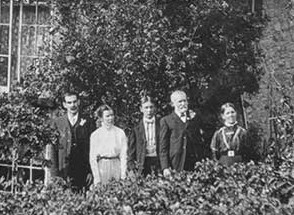
In 1903, James married Mary Garbett, the daughter of Charlotte Morse and John Garbett, a collier, and was brought up in Whitecroft. Mary already had a son, James Loris, who was born on 20 April 1899 to an unknown father. The family spent a couple of years in Normanton, Yorkshire, between 1905 and 1907, where James worked in a colliery, before returning to the Forest.
The family settled in a cottage on Palmers Flat close to Ellwood. James Loris had four siblings, Felix (born 1904), Mary Elijah (born 1905), Elijah (born 1907) and Maisey (born 1908). In November 1912, James Loris was baptised, with James Richard listed as his father. Sadly, in 1909, Mary Garbett’s brother Edward was killed in a colliery accident in South Wales, leaving his wife to bring up four children without a father.
James Richard was an active member of the Forest of Dean Miners Association (FDMA), the trade union representing the Forest of Dean miners, who made up the largest proportion of the workforce in the Forest. From 1886 to 1918, George Rowlinson served as the FDMA’s full-time agent and advocated moderation and conciliation in his dealings with the Forest of Dean colliery owners.
In 1911, James Richard was working as a checkweighman at Wimberry Slade drift mine, which was owned by the Cannop Colliery company and employed about 300 workers. Coal miners elected the checkweighman to check the findings of the mine owner’s weighman, when hewers were paid by the weight of coal mined. Therefore, a checkweighman had to be someone whom the men trusted. As a result, James became the men’s FDMA representative at the pit.
In October 1911, over 300 miners at Wimberry Slade were involved in an unofficial strike over the employment of 17 non-union men by the management of the colliery. Rowlinson did not intervene on the men’s behalf because they had not given notice as required by the trade union agreement with the owners. After three weeks with no strike pay, the men reluctantly returned to work.[1] The management took James to court for breaking the terms of his contract and impeding the working of the mine. The court decided that James should be sacked as checkweighman, and the magistrates ordered him to pay costs.[2]
At about this time, James became an active member of the Independent Labour Party (ILP). Established in 1893, the ILP was an attempt to create a working-class organisation politically independent of the Liberal Party and to campaign for working-class representation in the democratic process.
The Labour Party did not exist then. However, in 1900, the ILP helped found the Labour Representation Committee (LRC) with other affiliated organisations, including some trade unions. Its main function was to support a distinct group of MPs in Parliament to represent working-class interests, who had their own whips, and agreed upon policy, and recommended candidates to stand in elections.
In the 1906 general election, the LRC won 29 seats and afterwards, the MPs decided to adopt the name ‘The Labour Party’. In the party’s early years, the ILP provided much of its activist base as the party did not have individual membership until 1918 but operated as a conglomerate of affiliated bodies. The Miners Federation of Great Britain (MFGB), which represented the local miners’ associations nationally, did not affiliate to the LRC until 1909.
The conflict between liberalism and socialism manifested itself amongst Forest of Dean miners. Rowlinson was a member of the Liberal Party and opposed attempts by James and other miners to affiliate the FDMA to the Labour Party. There was a split between those miners, mainly from the Cinderford area, who supported Rowlinson and the Liberals, and those miners, mainly from West Dean, who supported Smith and the ILP.
The MP for the Forest of Dean from 1892-1911 was Sir Charles Dilke, a popular Liberal MP and an independent thinker, ready to defy the party whip on labour issues, especially in support of the Forest miners. After his death on 26 January 1911, an election was called for the following month.
The National Executive of the Labour Party decided that, given the large working-class population in the Forest, it should select a Labour candidate.4 The Executive proposed that Robert Smillie, the Vice President of the MFGB, should stand in the next election. Smillie visited the Forest in early February to discuss his nomination, followed by a meeting of representatives from all the trade unions in the Forest of Dean. Rowlinson and some of his supporters on the FDMA Executive argued against backing a Labour candidate, insisting on the continued support for the Liberals. So the attempt to select a Labour candidate failed.
The Liberals selected Sir Henry Webb from Hereford, a member of the gentry who was fond of fishing and shooting. He also held considerable financial interests in the coal industry, including a directorship of the Ocean Coal Company in South Wales. He was also a shareholder of the Norchard Colliery in Lydney. Webb won the election against the Conservative Party candidate.
In response, the Forest ILP launched a campaign within the mining community to sponsor a Labour candidate in any future general election. James Richard was instrumental in the first steps to establish the Dean Forest Labour Party at a meeting held at Speech House at the end of April 1912, attended by over 600 people. Smith chaired the meeting and explained that the meeting’s purpose was to consider putting forward a candidate to contest the parliamentary election in May 1912. James put the following resolution to the meeting.
In the opinion of the meeting, it was necessary that the workmen of the Forest should be represented in Parliament by a member who was independent of the Liberal or Tory parties, and that they call on the Executive Committee of the Forest of Dean Miners’ Association to take immediate steps to open negotiations with the Miners’ Federation to recommend a Labour candidate to contest the pending election.[3]
The resolution was passed unanimously. However, a letter from Rowlinson was read out to the meeting in which he argued that the gathering had no connection with the FDMA and so could not commit the union to support a Labour candidate. Rowlinson continued to campaign within the FDMA against the idea of a Labour Party candidate. After a bitter dispute with Rowlinson and his supporters, the Labour Party failed to obtain the support of the FDMA Executive Committee and could not raise the finances to contest the election.
One consequence of James’s involvement in the strike at Wimberry was that he was blacklisted and found it difficult to get work in the Forest. Subsequently, he moved to South Wales with his family, settled in Rogerstone in Newport, and found work at the Abercarn and Cwmcarn Collieries belonging to the Ebbw Vale Company further up the valley, which employed about 2500 men and boys.
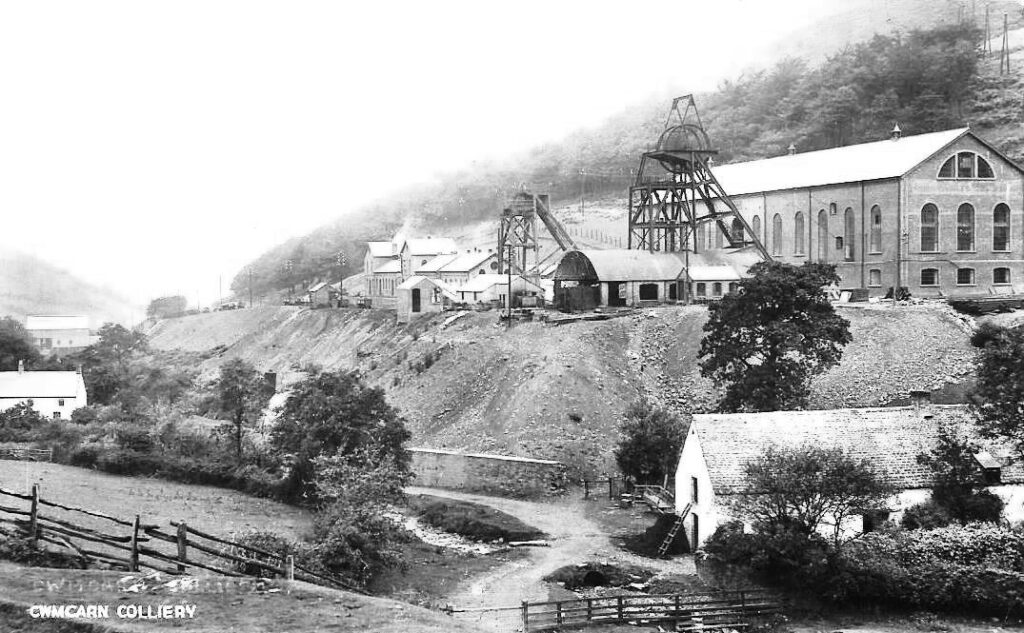
Many of the families who lived in Abercarn were still recovering from the worst mining disaster in the UK up to that date when, in 1878, 268 men and boys were killed in an explosion of methane gas at Abercarn Colliery.
https://nmrs.org.uk/mines-map/coal-mining-in-the-british-isles/swales/abercarn/cwmcarn-colliery/
Sayes Sisters
In February 1901, Emily Sayes married Stephen Adams from Gorsty Knoll. Stephen’s father had died of the injuries he received in 1903 while rescuing another miner trapped under debris from a roof fall. Emily and Stephen moved to Ynysbul, in South Wales, where Stephen could get better-paid colliery work than in the Forest. Migration between the Forest of Dean coalfield and South Wales and Yorkshire was common.
Elsie Sayes married Walter Fricker, an engineer, in October 1913 and moved to Leamington in Warwickshire.
Meanwhile, Sarah Sayes had moved to Bristol to work as a servant for a director of a large printing company in Southey House, Westbury-on-Trym. It was normal for young Forest women to leave home and go to work in domestic service for the wealthy, where they often had to work long hours for little pay and sometimes were the subject of abuse. In 1914, Sarah moved back to the Forest and married Richard Dowler, who worked at Cannop Colliery.
Sayes Brothers
By the summer of 1914, any dream of a better world was shattered by war. The policy of the MFGB was to coordinate action with all sections of the international working class to prevent war at any cost and to intervene with all means at its disposal to bring any war to an end. Sadly, trade unions and social democratic leaders failed to use the power of the trade union movement and their international organisations to achieve this. Soon, military recruitment began in an atmosphere of jingoism and peer pressure that celebrated nationhood and empire. For many young men working in mines, the prospect of adventure and quick victory seemed a better option than working underground.
In 1909, Lesley Sayes joined the Grenadier Guards Reserve 2nd Battalion and consequently attended training sessions which gave him a break from mining. He was the first member of the family to move to South Wales to work at the Cwmcarn Colliery in Abercarn. In January 1914, he married Alice Barnes, whose brothers worked at the Cwmcarn colliery.
Lesley was called up in August 1914 and was sent to France with the Grenadier Guards at the start of the war. He was wounded on Christmas Eve in 1914 at La Bassée. He returned to duty but was discharged in October 1916 because of his wounds. After he recovered, he moved back to Abercarn to work at Cwmcarn Colliery.
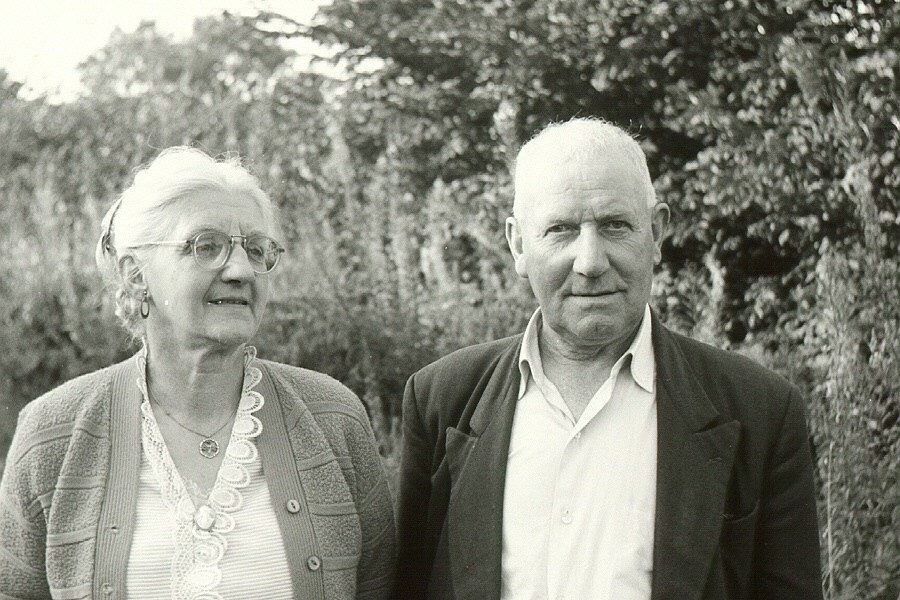
Before the war, Samuel Sayes moved to Yorkshire to obtain better-paid work in the Yorkshire coalfield. He joined the Royal Navy Nelson Battalion during World War One, where he served in the Gallipoli campaign. Although composed largely of naval reservists and sailors, the battalion fought primarily as infantry on land. The battalion suffered heavy casualties from combat and disease during the campaign. When the Allied evacuation of Gallipoli took place in late 1915 and early 1916, most of the surviving members were withdrawn. However, Samuel died while on a hospital ship on the Aegean Sea between Turkey and Greece of the disease Enteric fever on 27 June 1916.
John Sayes trained as a teacher before the war. Before he enlisted, John was teaching in Kent, having previously been an assistant at St. John’s School, Coleford. He joined the Royal Army Medical Corps (RAMC) and was later promoted to 2nd Lieutenant in the Devonshire Regiment. He was killed in France on 31 October 1918, days before the armistice.
Edwin Sayes emigrated to New Zealand before the war and served in the New Zealand military.
James Loris joined the South Wales Borderers 14th Welsh Regiment, probably sometime after his eighteenth birthday in April 1917. It is unclear how much time he spent in action abroad. He was discharged in April 1919, moved back to Rogerstone, and took work with his father at Cwmcarn Colliery.
Meanwhile back in the Forest of Dean, in the Spring of 1918 Rowlinson was voted out of office, and a group of younger and more militant miners were elected to lead the FDMA and a new agent was appointed. In December 1918, a Labour MP was elected to represent the Forest of Dean in parliament.
Lockouts
By 1921, James Loris and Felix joined their father working at the colliery. After the threat of industrial action, the miners’ working conditions, wages, and hours improved. However, in 1921, in response to a depression in the coal trade, wages were radically cut by the owners. The miners across the country refused to accept this and were locked out. After three months, they returned to work defeated
After the 1921 lockout, Lesley and Alice and Emily and Stephen returned to Ellwood. Stephen was seriously injured in a pit accident in December 1924 and did not fully recover.[4]
After the 1921 lockout, James Richard and James Loris remained in South Wales working at Cwmcarn Colliery. Sadly, in June 1924, one of James Richards’ other sons, Felix, who also worked at Cwmcarn Colliery, was killed in an accident. James Loris returned to the Forest for a while in 1925 when he was temporarily laid off due to lack of demand for coal.
This was followed by the dramatic events surrounding the 1926 General Strike and miners’ lockout, which resulted in rioting in Cwmcarn. After nine months, the miners returned to work defeated again, and facing a decade of economic depression, poverty and unemployment. Sarah and Richard decided there was no future for them in the Forest and emigrated to New Zealand. Elsie and Walter followed later.
James Richard’s wife, Mary, died in April 1927, and so he moved back to Ellwood while his son James Loris remained in Wales. Elijah died in December 1927.
Meanwhile, both of James Richards’ daughters married a collier; one worked in the Forest and the other at Cwmcarn. The other son Elijah (born 1907), worked at Cwmcarn before returning to the Forest to work at Princess Royal colliery.
The Trial of Beatrice Pace
On the morning of 10 January 1928, Harry Pace, a quarryman, died after a long, painful and mysterious illness at Rose Cottage, the house he shared with his wife Beatrice and their five children in Fetter Hill between Milkwall and Ellwood. Harry and Beatrice were close friends with Alice and Lesley Sayes, who lived nearby.
Although Harry’s doctor at first certified a natural death, a post-mortem conducted at the behest of the dead man’s suspicious family revealed that he had died from a large dose of arsenic. Just like many Foresters, Harry kept a few sheep and ran them on Forest waste, claiming the right to common on Crown land. Every year he used arsenic to dip the sheep to prevent disease. Although it could not conclusively determine how the arsenic had found its way into his body, the inquest jury, in a controversial decision, charged Beatrice with Harry’s murder.
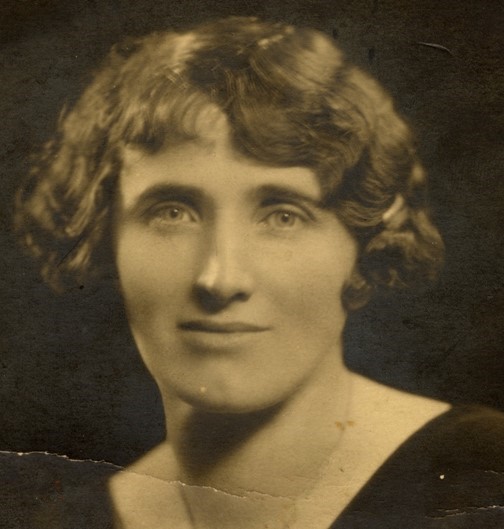
Harry had become ill over the summer of 1927 and was eventually admitted to Gloucestershire Infirmary, where the doctors suspected he was suffering from arsenic poisoning. During the trial of Beatrice for murder, it became apparent that she was a victim of domestic abuse and this gave her a motive for the killing of her husband. In addition, and to add to the drama, accusations were levelled against Lesley for having an affair with Beatrice, and further suspicions were raised when it became apparent that Harry Pace had lent Lesley Sayes some money to buy his house.
In a sensational verdict, Beatrice was found not guilty. Soon after Beatrice left the district and Lesley and Alice returned to Abercan. In the 1930s Lesley joined the communist party,
Rose Cottage was sold in 1933 by James Richard Sayes and Leslie Sayes to John William Nash, who was the husband of Maisey, James Richard’s daughter. James Richard died in 1936 in the Forest of Dean. Lesley remained in South Wales and died in 1966.
Spain
At some stage, James Loris Sayes joined the Communist Party and in 1937 volunteered to join the International Brigades fighting in Spain. More than 2,300 volunteers, many of whom were miners, travelled from Britain to fight on the Republican side against the Fascists. Five hundred of these volunteers were killed in the civil war, which led to the massacre of Republican sympathisers and thousands of deaths. Coming from valleys across South Wales, the 200-odd Welsh miners made up one of the largest contingents in the British Battalion.
These men had over a decade of bitter industrial and political experience, including the 1921 and 1926 lockouts, which were followed by stay-in strikes, hunger marches, mass demonstrations against means test regulations and halting fascist incursions into the valleys. Consequently, they brought with them a political tradition unique in Britain, with its combination of trade union militancy, radical extra-parliamentary activity and international political and humanitarian solidarity. Their story is described Hywel Francis’s excellent book Miners Against Fascism, Wales and the Spanish Civil War.
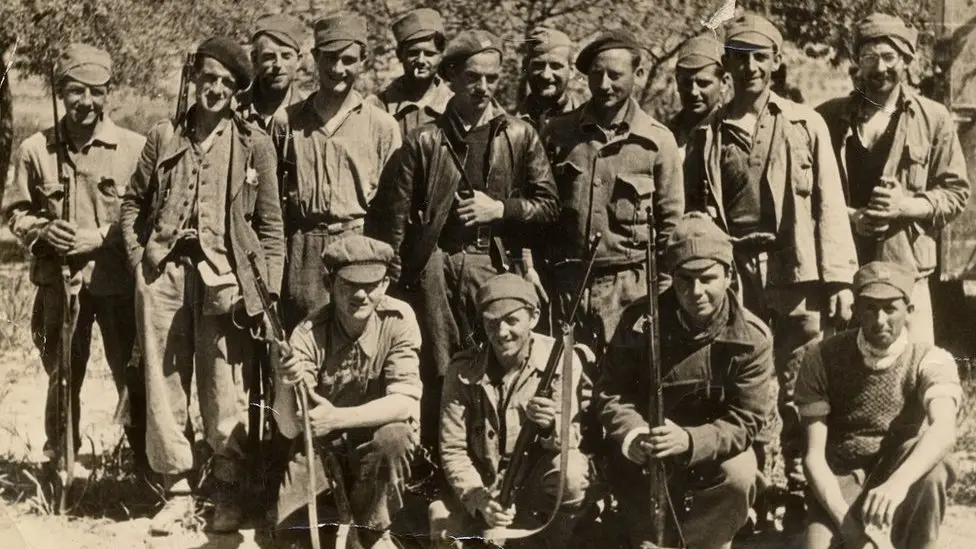
James Loris arrived in Spain on 15 July 1937 and was sent to work at the Auto Park in Albacete, whose main function was maintaining and repairing vehicles and transporting troops, ammunition, food, medical supplies, and equipment between Albacete and the front lines. He left Spain on 9th December 1937 and returned to live in lodgings at Abercarn and to work at the colliery. He married Margaret Holland in 1941 and moved to Bedwellty, where he died on 22nd April 1949.
Appendix
Gloucester Citizen 2 October 1911
Nearly a fortnight ago, because certain workmen—less than 20 in number—employed at Wimberry Slade, belonging to the Cannop Colliery Company, refused to join the workmen’s association, the general body of the employees struck work without notice given. Negotiations were opened, and it resulted—as the men were held to have been in the wrong in leaving without notice —in the management consenting to the men returning to work on the old terms, provided they apologised and paid half-a-crown fine each, besides choosing for themselves a fresh checkweighman. The men have agreed to the two first conditions, but decline to part with their representative. They have now all joined the association. On Monday morning, the men were locked out; all the pit horses over 20 in number—have been withdrawn, and the drift, which employed some 400 men and boys, is for the present standstill.
Gloucester Citizen – Wednesday 11 October 1911
At Coleford Police Court Tuesday—there being a full bench of magistrates, presided over by Mr C. T. Palmer—much interest was centred in a case having relation to the prevailing labour dispute at Drift Colliery. A charge was made against James R. Sayes, Palmer’s Flat, for on the 18th and 19th September last, being checkweighman appointed for the weighing coal from the Colliery, did impede and interrupt the working of the mine, did interfere with some of the workmen, and with the management of the mine to the detriment of the owners, agents, and manager of the mine. The summons was issued at the instance of Mr John J. Joynes, the manager, who applied for the removal of Sayes as checkweighman.
Mr Abel Thomas. K.C., M.P., instructed by Mr Harold W. Berthon, Lydney, prosecuted, and the defendant was represented by Mr F. E. Wetherley (Bristol), instructed by Messrs. Gilmour and Lloyd, on behalf of the Forest of Dean Miners Association.
The Court was crowded with colliery workmen. and a large crowd stood outside the building during the whole of the sitting.
In opening the case, Mr Abel Thomas said in June last the workmen in question went to the manager and asked them to get rid of all the non-union men employed in the mine. That matter was amicably settled.
September 18th and 19th last the acts complained of were committed by the defendant. Practically all the workmen were members of the Union, hut few were not in compliance—were behind with their payments. On September 18th, Saves, the men’s checkweighman, was at the weighing office when some of the Workmen’s Association Committee men had a conversation with him. They made arrangements for a meeting of the workmen on Tuesday, 19th September, to decide certain procedure. They decided that if the Company did not immediately get rid of the 17 non-complying members of that Association, they would at once cease working without giving notice. The notice calling the men together was written by Sayes and attached at the head of the drift. Sayes also presided at the meeting, and directed the course |of the business, told the men what the position was, and requested someone to propose a resolution that if the non-Union men were not turned back, the general body of the men would forthwith down tools. That resolution was put and carried.
Mr Joynes, manager, told the men immediately after the meeting that the drift was open for them, and if they did not down, they would be breaking contracts, and liable to be proceeded against. The men did not go down, and when the next shift came, Sayes told them what had been decided. Those men also turned back. That happened on the 19th September, and the men were still out. The number affected was about 300. Mr Thomas added that in the opinion of the management it would be disastrous to continue this deplorable struggle, and if the prosecution showed they had a prima facie case against Sayes then he would have to show cause why the application that he be removed from his position should not be granted. The case was taken under Section 13 of the Coal Mines Regulation Act, 1887.
Evidence was then called.
Mr Harry Jones, Sunnyside, Yorkley, official weighman; George Watson, of Berry Hill, day foreman; Edwin Aston, of Berry Hill, night deputy overman; William Vorke, Cannop. general overman; and Mr J. J. Joynes all gave evidence at considerable length.
The allegations against defendant were that he said it was no good playing with the non-unionists, the thing was to stop the wheels until the non-unionists were stopped, and that he directed the men to pass the resolution referred to. and generally incited them to the course which had been followed.
Defendant, in evidence, denied saying much of that which had been imputed to him. He admitted, however, that he wrote out the pit’s head notice, that he presided over the meeting, and generally had conduct of the business. He denied directing anyone to move the resolution question, and said all he did was ask them to propose a resolution with reference to the matter.
In cross-examination, the defendant said there were three questions in dispute between the management and the men, and one not settled was whether or not he should continue as checkweighman. The proprietors desired that he should be discharged.
The Bench retired to consider their decision, and on returning into Court, after comparatively short absence, the Chairman said the magistrates considered the case proved, and their order was that Saves should forthwith be removed from the office of checkweighman at the colliery. He also had to pay the costs amounting £1 14s.
Western Mail 9 May 1934
The condition of houses in two streets at Cwmcarn was the subject upon which a deputation from the Cwmcarn Communist party interviewed the Abercarn Council housing committee on Tuesday. Mr. Leslie Sayes. a member of the deputation. stated that some windows would not shut and some would not open. Doors were the same. In some houses the roofs leaked to such an extent that baths had to be put to catch the rain. The pavements were also in a deplorable condition, and tons of earth and stones were washed down from the mountain sides during the rainy periods. Mr. Sayes added that complaints had been made by women that the heels of their shoes had been torn off. It was decided that the sanitary inspector should prepare a schedule of the work needed with a view to the owners being approached if necessary.
[1] Gloucester Journal 14 October 1911.
[2] See appendix
[3] Gloucester Journal 27 April 1912.
[4] Gloucester Citizen 5 December 1924