On 29 October, during the 1926 miners’ lockout, eighteen-year-old Arthur Rivers, from Wales, was crushed to death while working in a small drift mine in Wet Wood, near Cannop Ponds in the Forest of Dean. During the inquest, it was recorded that the mine’s owners were the O. and C. (Oaken and Churchway) Syndicate, Ltd., with its registered office at Talbot House, 98, St. Martin’s Lane, Westminster. The syndicate’s directors were William Sydney Stayt Taylor (Sydney Taylor) of Old Deane Hall, Speech House, Coleford, and his brother Tom Stayt Taylor of Weston-Super-Mare. The inquest reported the description of the death by one of Rivers’ workmates, William Gibbs:
On the afternoon of Friday, October 29th, without the slightest warning, the roof gave way, at which time he was near Rivers. About one cwt of dirt fell or rolled upon the Rivers’ feet and prevented him from getting away. He caught hold of his hand and endeavoured to extricate him, but found it impossible to do so. A second fall then occurred, and he made for safety. He then returned to Rivers, and having moved some of the dirt, felt his hand. Rivers asked him to shift the debris from around his face as he could not breathe. He encouraged him, and said they would have it off him soon. Rivers said, “It is impossible,” and then wished him “So long.”
He was then obliged to leave again on account of a third fall, several tons in weight, but none of it fell on Rivers. As soon as possible, efforts were made to release Rivers, but quite an hour elapsed from the time of the first fall before they succeeded in doing so. Artificial respiration was carried on for two hours, but without success. He said there was no lack of timber at the place. He considered that they had taken all reasonable precautions for their safety.
The jury recorded the following verdict:
That death was due to suffocation, caused by a fall of earth in the outcrop workings. We find the O. and C. Syndicate, Ltd., liable owing to their neglect (though not culpable neglect) in not complying with the rules and regulations laid down by the Coal Mines Act, 1841, and letters sent to them by Mr Forster Brown, Deputy Gaveller, drawing their attention to the infringement of these rules.[1]
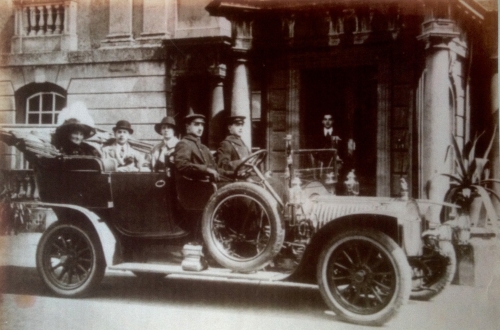
Taylor made his living as a merchant, coal lease owner, and general commission broker. In April 1911, her lived in the large mansion, Cleeve Hill House, with extensive grounds, in Downed Bristol, where he employed ten servants. However, Taylor was declared bankrupt later in 1911. Despite this, he moved to the Forest in the early 1920s and embarked on a series of business ventures mainly connected with the Forest of Dean coalfield, including the mine in Wet Wood.
In early 1927, Taylor worked closely with William Morris (Lord Nuffield), the car manufacturer, on the acquisition of Howbeach colliery and a plan to buy up and develop the whole of the Forest of Dean coalfield. However, when he appealed against his bankruptcy in June 1927, the judge described him as “not in possession of that degree of moral integrity and uprightness”.[2]
What was the story behind Rivers’ death? Why were these Welshmen working in the Forest of Dean during the nine-month 1926 miners’ lockout? What is outcropping? Who were these rich men from the O. and C. Syndicate, and what were they doing in the Forest, employing men to mine coal in the middle of a major industrial dispute? What was Taylor’s relationship with Lord Nuffield? What were the consequences for anyone who had dealings with them? This article will attempt to answer some of these questions.
The right to mine coal in the Forest of Dean
In 1925, in the Forest of Dean, there were a total of 6,742 men working in the 10 large collieries employing more than 100 men. There were also 14 smaller and medium-sized collieries, together employing 311 men, owned by individual entrepreneurs or small mining companies. In addition, there were 34 mines owned by free miners, who operated under a system based on statutory rights unique to the Forest of Dean. In 1925, the free mines employed 243 workers, including the free miners themselves.[2a]
Free mining rights have been claimed from ‘time immemorial’ by any miner born in the Hundred of St Briavels (which roughly covers the area occupied by the Forest of Dean) who had worked a year and a day in a Forest pit. The Dean Forest (Mines) Act of 1838 confirmed the free miners’ exclusive rights to the Forest’s minerals. This allowed any free miner to apply to the Deputy Gaveller, who represented the Crown, for a gale, which is a grant (right to mine) of a specific seam of coal or a deposit of iron ore or stone, in a specific location anywhere in the statutory Forest of Dean, provided he paid royalties to the Crown, the owner of the land. The Coal Mines Act, 1841 set out further rules and regulations for working coal mines in the Forest of Dean.
Most free miners lacked the capital to exploit the lower seams of coal, but the Act permitted a galee to sell, lease, or gift his gale to persons other than free miners. This allowed colliery companies and entrepreneurial capitalists to enter the Forest of Dean during the nineteenth and twentieth centuries and exploit its minerals. In the case described above, the O. and C. Syndicate had bought the Oaken and Churchway gale from a free miner in a series of transactions in January 1924.
Arthur Rivers
Rivers was born in Bristol in 1908 but moved with his family to South Wales a few years later, where his father found work in the mines. His brother, George, was killed in the Battle of Jutland in 1916 and his father died in 1917. His mother remarried, and the family moved to St. Brithdir, where Arthur worked at New Tredegar Colliery, owned by the Powell Duffryn Steam Coal Company.
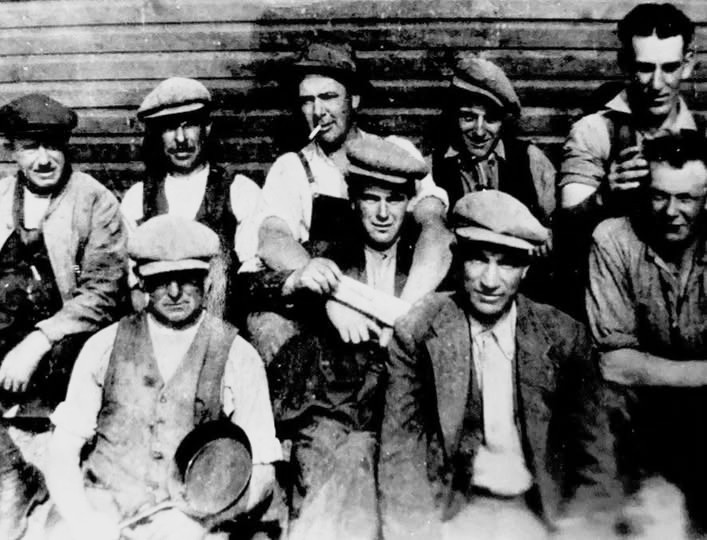
In October 1925, the colliery laid off its workers due to a depression in the coal trade, and they were then employed on day-to-day contracts. In May 1926, colliery owners across the UK announced they would cut wages and increase hours. Miners in all districts refused to accept this and, with the backing of their trade union, the Miners Federation of Great Britain (MFGB), were locked out.
The situation was already tough for the miners and their families in Brithdir because of the layoffs at New Tredegar before the lockout. The culture against blacklegging was deeply ingrained in the South Wales mining communities and so it would have been unacceptable to return to work at New Tredegar without the agreement of the MFGB. However, in October 1926 many families struggled to get enough food to eat, so any offer of work outside the valley would have been welcome.
In October 1926, Rivers, William Gibbs, and his two sons, William, aged 18, and Ennis, aged 14, all from St. Brithdir, were recruited by Sydney Taylor to work for his company on the outcrop of his gale in Wet Wood, in Russell’s enclosure near Cannop Ponds. William Gibbs was born in Drybrook, so he had relatives there where they could get lodgings.
The Supply of Coal during the 1926 Lockout
In 1926, the government implemented stringent emergency regulations to control coal supply, distribution, and consumption. The government restricted domestic coal purchases to one hundredweight (cwt) per household per week. Local authorities later reduced this to half a cwt per week in certain districts as shortages intensified. In addition:
- Businesses and local infrastructure were strictly regulated to conserve fuel.
- Local authorities appointed emergency committees and food and coal officers to oversee regional supplies to prevent hoarding or profiteering. Government organisations and critical entities could receive British coal only with a specific permit issued by these local authorities.
- The trade unions agreed not to interfere with the supply of coal to critical public services and private homes.
- The Board of Trade and the Mines Department had the power to provide directions on the movement and distribution of existing coal stocks to prevent a collapse of the national electricity grid.
- The government directly imported foreign coal throughout the autumn months to distribute to essential services.
Outcropping
In 1926, during the nine-month miners’ lockout, groups of colliers from the Forest of Dean opened small pits on the outcrop. Their motivation was to use the coal for their own domestic purposes or sell it to raise cash to buy food for their families. They accessed the coal by digging directly into the outcrop by hand where a seam reached the surface.
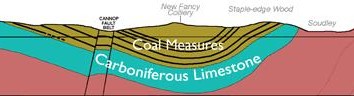
This practice was called outcropping, and the pits were often called ‘strike pits’. The work was heavy because it sometimes involved removing soil to a depth of twelve feet. The work was also very dangerous because the workings could collapse. There are numerous reports in the newspapers of miners being killed while working the outcrop during strikes. Fifty people were killed in 43 separate fatal accidents in connection with the working of surface coal outcrops during the 1926 mining lockout.[3]
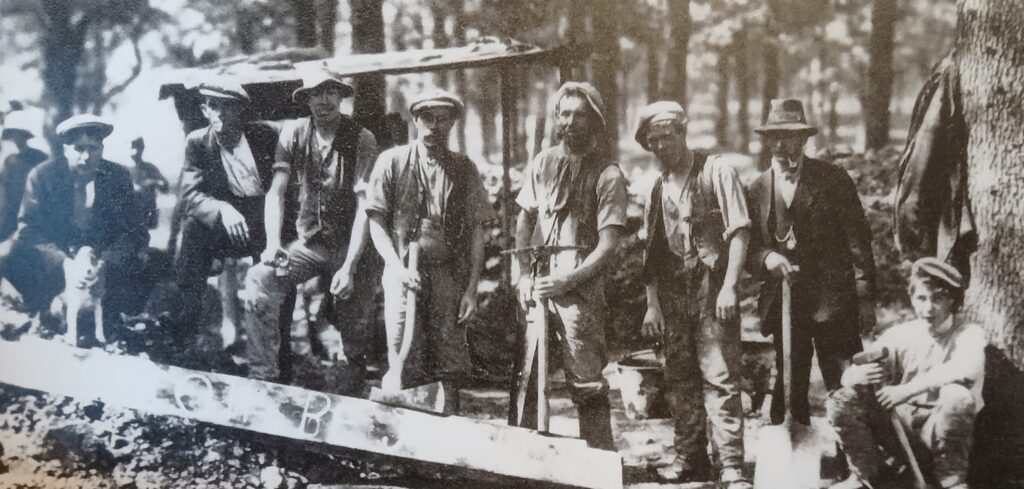
Outcropping was common during miners’ strikes. Most outcrop workings were small cooperative concerns run by locked-out miners. The MFGB was usually not too concerned if the coal, usually of poor quality, was for miners’ use or if small quantities were sold for cash to buy food. Striking miners could spend part of the day outcropping, as well as taking up picket duties, working in soup kitchens, and doing other solidarity work. Small-scale cooperative outcropping was tolerated by the mining trade unions for several reasons because it provided:
- coal to miners’ families and others in the community for domestic use such as heating, cooking and washing.
- a small income for miners’ families suffering from financial hardship.
- a means to survive a lockout and resist the temptation to return to work.
- an alternative to Poor Law Relief, which was only available to miners’ dependents and left single men with no support. (Anyone caught working the outcrop would be denied Poor Law relief.)
- a cheaper source of coal to public institutions which served the mining community such as the workhouses and the district council.
However, coal prices increased during strikes and lockouts. Consequently, in some cases, businessmen intervened and organised outcropping on an industrial scale to profiteer from the coal shortage. In commercial operations like this, miners’ unions often tried to shut them down, sometimes leading to violence.
The 1926 Lockout in the Forest of Dean
During the nine-month 1926 lockout in the Forest of Dean, an agreement between the Forest of Dean Miners Association (FDMA), the trade union representing Forest of Dean miners, and the Gloucester Electricity Committee meant supplies were guaranteed to hospitals and private homes but not factories. Cinderford gasworks had a three-week coal supply, and Lydney power station had stockpiled a three-month supply. In addition, the colliery companies had been stockpiling coal in preparation for the conflict. Coal was available at a price but was still in short supply, and outcropping allowed the local community in the Forest to access coal for their own use.
Soon after the start of the lockout, outcropping became a widespread activity in the coalfield, with several hundred men actively working the outcrop at any one time.[4] The sites included Woorgreen, Delving Wood, Crab Tree Hill, Cockshutt, Oaken Hill, Heywood, Mallards Pike, Wet Wood or anywhere on the outcrops.
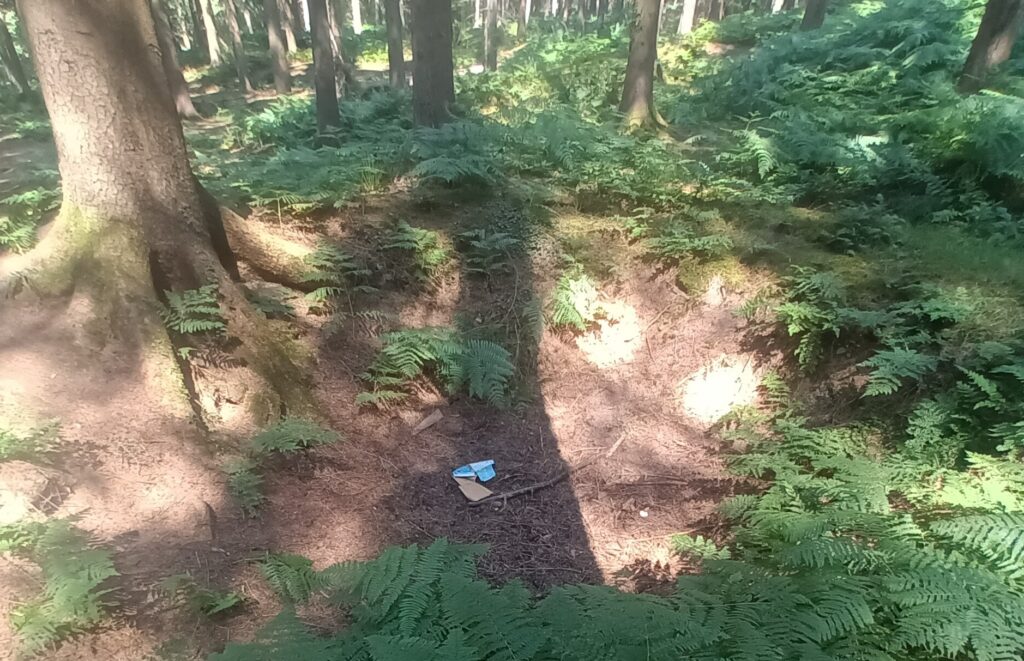
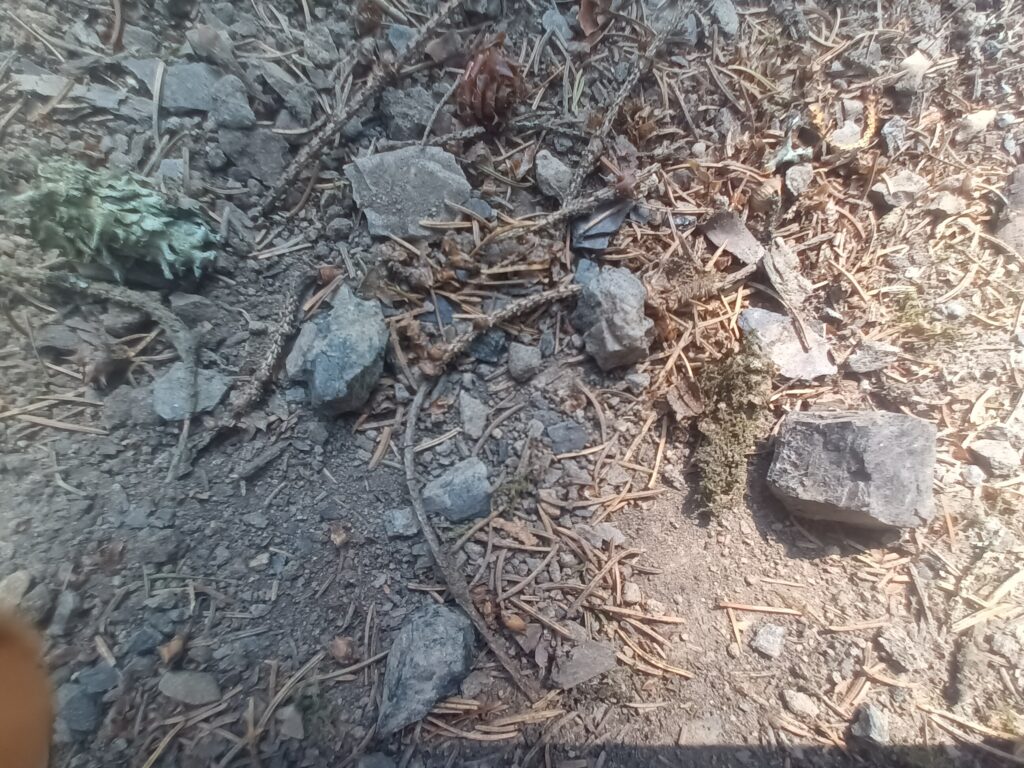
Initially, the Forest colliery owners tolerated striking miners outcropping on their gales by accessing them from the surface. The authorities were not concerned either because they were keen to get their hands on extra supplies of coal to run local public services like the workhouses, schools, etc
In theory, the men should have gained consent from D. W. Young, H.M. Deputy Surveyor of Dean Forest, for permission to cut the surface. This permission was given on the condition that the men filled in the holes when finished, and that if they mined any coal, it was for their own use and not for sale. However, the scale of the outcropping made it difficult for the Young to monitor the activity.
It was dangerous work, and Rivers was not the only person killed while working the outcrop in the Forest in 1926. Six-year-old Joseph Blake from Steam Mills was accidentally killed by a large piece of timber which was being transported to an outcrop mine on Nofold Green. Gilbert Roberts recalled the event:
In 1926 there were some of these strike pits. There was one at Steam Mills. Oh dear, there were two brothers sorting out timber from a stack for a pit. They flung over the stack and there was a boy sitting the other side and some timber flung over killed him.
Poor Law Relief or Outcropping
In the nineteenth century, the destitute could include strikers and their dependents. However, after the Merthyr Tydfil Judgement of 1900, the law forbade relief for strikers or locked-out workers on the basis that work was available to them but allowed relief for their dependents.[5] Single men were left without support, and the relief provided to miners’ dependents was meagre and given only as a loan.
Consequently, and despite the dangers, men like Graham Morgan’s grandfather, Sam Morgan, now a widower with children, decided to work the outcrop rather than claim Poor Law relief.[6] Harry Barton, who would later become a member of the FDMA Executive, remembers:
I was at Lightmoor in 1926. I had saved some money by then. I was saving up to get married. Then that knocked it on the head for a time. But I’ll tell you what we did – what was being done (I didn’t do it). It was more than for fun. Just above the Dilke Hospital there used to be an old colliery, Woorgreen they called it. Now, I got to find out they were digging for coal up there when the strike was on, and selling this coal. One of my friends, a chap called Sid Cooksey (he married my cousin Lil Young), asked me one day if I’d go up with him. I said, ‘What for?’ He said to get some coal so he could sell it for his home. ‘Look,’ I said. ‘I don’t want the money. I’ve been all right.’ But he was a married man, so I said, ‘I’ll go.’ So we took another man called Stan Rogers up with us. (He was a relation; he married a cousin of mine.) We went up there and searched around and there was sure to be a hundred miners up there digging holes to get the coal out. We looked around, and well, we thought they had all got the best of the plots; we got no chance at all. There was a siding there where they used to run the heavy wagons. There was the rails still there. I went across on my own and started scraping down between the sleepers and I hit the coal – 18 inches of coal. It was all the way up the railway line. Other blokes had been digging their hearts out and they didn’t know that. I called my mates over quietly and said ‘Let’s rip this all across there.’ We got three and a half tons of coal out from there in about five hours. We sold it to Westbury Union (the Workhouse) for £3 10s.[7]
This shows that local authority institutions were complicit in outcropping and happy to pay a lower price for coal than from official sources, and, in the process, save local ratepayers some money. One of the other large outcropping sites in 1926 was Wet Wood, near Cannop. Hylton Miles remembers:
As a lad I went up to Wet Wood off the Cannop Road with my father where he and his mates were digging coal in a strike pit. It was only a shallow seam and they went down a ladder to get the coal out. They worked night and day. The coal was taken off by the Gwynne family in a horse and cart. This started them off on their haulage business.[8]
The Gwynne family, made up of James, Ivor, Roland and Reginald, ran their haulage business from Parkend. The firm officially incorporated as a limited company, Ivor J. Gwynne (Parkend), Ltd., on 28 September 1956 with a capital of £2,000. Its registered directors were Ivor J. Gwynne and Emma E. Gwynne.
A grey area existed between those working on small-scale cooperative outcropping operations to earn money to buy food and those profiteering by selling larger quantities of coal. Eric Warren remembers that:
I remember my father [Fred Warren] dug coal in the strike pits with his mates. I was five at the time. They did it at night in secret so the pickets and the police did not know, and they slept nearby in the woods in the daytime. They dug at Mallard’s Pike and elsewhere. They cut a four to five foot hole and went down short distance, making a sort of bell pit like the old miners used to, starting in one corner and getting the coal out and then moving on, filling the corner with dirt. They went underground in a level and propped up the roof. I remember my father cutting off the root of a tree and using it as a pit prop. Rossiter & James of Parkend came to the site with a lorry and loaded the coal on it and paid the men. But they were convinced in the end by the union that they were blacklegging and gave it up.[9]
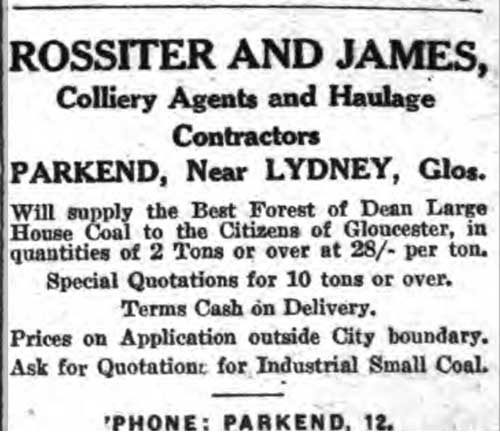
The Cheltenham Chronicle recorded that about 250 men were working the outcrops in Wet Wood at the time of Rivers’ death.[10] The problem became significant for the FDMA when businessmen like Taylor became involved and large amounts of money changed hands. Harry Roberts recalls the incident:
One of the places where miners got coal during the strike was just off the road almost opposite the Fancy. There was a four foot seam of coal there only eight feet down. They’d dig a square, twelve foot by twelve foot, chuck the dirt out of the way, and there they’d have four foot of coal. They’d get that out and go in three foot on all four sides – under the dirt. By only going in three foot they didn’t need to timber-up One man ignored the rule and went in further and got killed. Then they’d start the whole process over again six feet away and chuck the dirt in the first hole, and then on again filling the previous hole.
I was only twelve then and still at school. Lew Little, he was at school with me, but he was eighteen months older and he went there to help his father and brother. He was at it for six months and never went back to school. The coal had to be guarded at night. Lew, who was on guard at one time, was found fast asleep leaning against a tree trunk next morning. A consortium of lorry drivers bought and collected the coal and paid £2 per ton, twice the pithead price.[11]
The FDMA tried to shut down large commercial operations like this, but the scale of outcropping in different parts of the coalfield made this difficult. John Williams, the FDMA agent, spent some of his time visiting outcrop workings to persuade the men working on larger operations to desist.
The police recorded that there were 35 locations where large-scale mining of the outcrop was taking place in the Forest and Williams had to spend some of his time organising the picketing of these sites as well as dealing with the small collieries.[12]
Commercial-scale outcropping was a national problem for the MFGB. The Gloucester Citizen reported that for the first week of July, 1,200,000 tons of coal were imported, but there were also 100,000 tons from outcrops and 200,000 tons from working mines.[13] The FDMA and MFGB became increasingly concerned about the volume of coal mined from the outcrop because they felt it was undermining the strike.
William Sydney Stayt Taylor
William Sydney Stayt Taylor (Sydney Taylor) was born in 1878 in Woodstock, Oxfordshire. His father, James Otho Taylor, worked as a butcher, grocer, meat salesman, and provision dealer, making his living selling goods, mainly meat, at market stalls. His mother was a Stayt. He married Mary Adams in February 1877, and soon after, their first child, usually called Sydney, was born in January 1878, followed by a daughter in May 1879. The family then moved to Chipping Norton, where James worked as a butcher and baker, employing two men and had five more children. In the 1890s, the family moved to Cheltenham, where James carried on his trade in meat
James had a reputation for high living and extravagant spending in Cheltenham. He lived at Horton House (now a large Residential Care Home), renting it for £60 a year. He organised champagne parties, and his son Sydney drove around town in a brougham (a four-wheeled carriage drawn by a single horse) with a coachman wearing a cockade.[14]
James was fined for using an unjust weighing machine in Ross in July 1899 and declared bankrupt in 1900.[15] However, he continued trading and, in 1911, lived in Merthyr Tydfil, where he sold meat and employed staff. In 1921, he remarried and lived in Penalt, where he worked as a fruit merchant.
Meanwhile, Sydney Taylor, now in his early twenties, had become a businessman. In 1903, he went into partnership with Edwin Auguste Trapnell, who owned the Star Hotel in Cheltenham. Edwin sold the Star in 1903 for £12,330 to fund a new business venture. Trapnell and Taylor jointly established a company named A. Trapnell and Co., which operated as merchants, coal lease owners, and general commission brokers. Taylor was the junior partner, having invested only £500 and serving as office manager, while Edwin invested £4000 and handled most financial decisions.[16] On 12 November 1903, they acquired the Findall Mine Level in the Forest of Dean. In 1906, they sold it to Wallsend Colliery Ltd, which subsequently sold it to Henry Crawshay Company Ltd, which developed a new colliery, Eastern United, on the site.[17]
Their first serious venture was to buy New Pleasant colliery in Cinderford and some nearby clay fields (with the potential to manufacture bricks) for £3000. They then tried to raise cash by promoting the formation of the Cinderford Coal, Brick, Tile and Fireclay Company, which they registered in May 1904, to raise £18,000 (£1 shares). The plan was for the company to buy the colliery and clayfields from them and use the remaining money for development.[18] The venture failed when newspaper reports appeared warning investors of a potential scam.[19]
The next ventures were more successful. In 1904 they bought the Union and Cannop gale from the Crawshays for £2000 and sold it to a newly formed syndicate in 1905 for £4500. The syndicate went on to develop Cannop as one of the largest collieries in the Forest of Dean.
In 1905, Trapnell and Co invested £5000 in a new project in South Wales. The company formed a syndicate with two others and bought the leases of the Cawdor and Garnant Collieries in Carmarthen, subject to a mortgage of £ 30,000. The syndicate then promoted the formation of the Cawdor and Garnant Collieries Ltd, which was registered with a capital of £80,000. The syndicate sold the collieries to the new limited company for £56,000 plus £17,000 in shares. The company operated significant anthracite coal extraction facilities in Garnant. In 1908, they sold their shares in the company to a French company for £5000, making a net profit of £4500.
In their next venture, they bought a sixty-year lease to the Cynheidre colliery, near Llanelly, at a peppercorn rent rising from £150 to £1500. They sold the lease for £6000 to a French Company, making a profit of £4,500.
Next, they promoted a company called the Stepney Motor Wheel Co., Ltd., making a profit of £12,500. They acquired the American rights of the company for £20,000, promoted Spare Motor Wheel America Ltd, and made a profit of £10,000, but subsequently lost £10,000 when dealing in its shares. However, they bought its Italian rights and made a profit of £5000. Next, they lost £2,418 on the purchase and sale of the Pantmawr Anthracite Colliery at Ystradgynlais to a French syndicate.[20]
Bristol
In 1908, they moved to Bristol and continued as partners in the same business, acquiring and selling shares in collieries and other companies, with the intention of floating a bank. The firm was successful at this point and in March 1908 had a credit balance at the bank of £10,570 and capital in stocks and property of £20,000, with liabilities of £5,000. The agreement between the two men was that Trapnell would get two-thirds of the profits and Taylor, who was now directly involved in financial management, one-third.
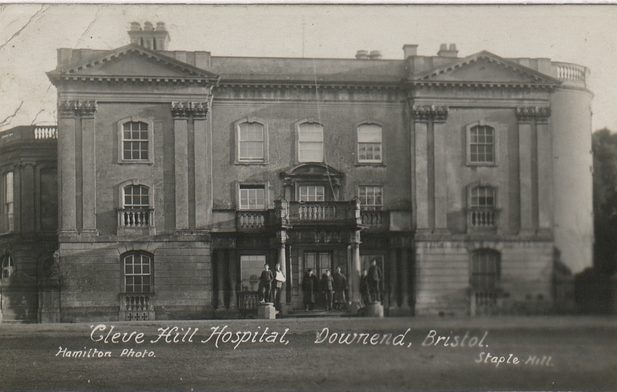
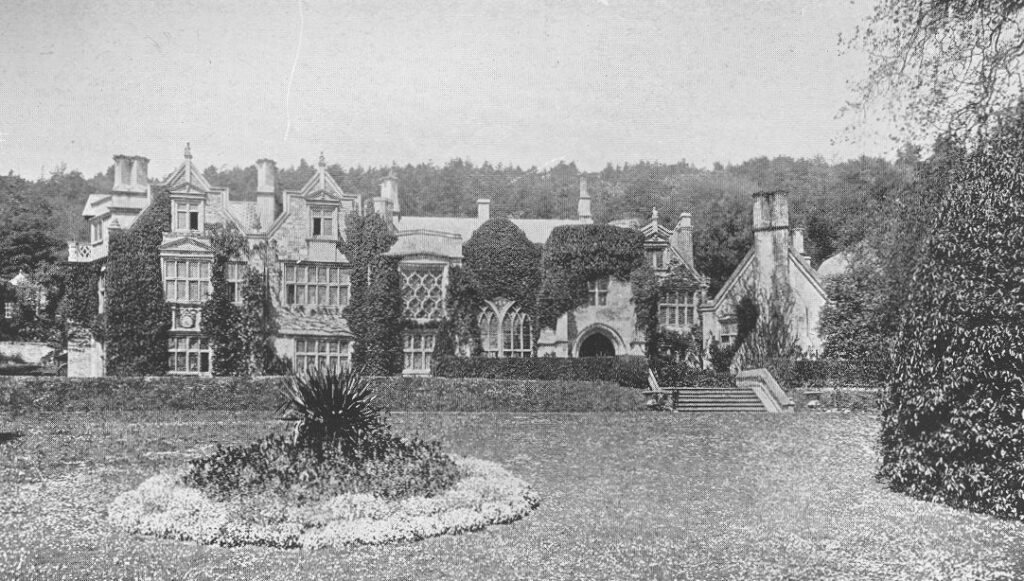
Taylor rented Cleeve Hill House, Downend, with 40 acres of land, for £250 per year and employed ten servants.[21] The Cave family, who were Bristol merchants, bankers and the largest landowners in the district, owned the house. The Cave family made a fortune from their plantations in the West Indies using enslaved African labour.
In the 1911 census, Taylor was still living at Cleeve Hall and was described as a coal master. He shared the mansion with his sister, described as a lady; his brother Edgar, an estate agent and another brother, Tom, a trainee stockbroker, with five live-in servants. One of the live-in servants was Ernest Edgar Poole, the son of the head gardener who had worked for the Cave family in London as one of their servants.
At the same time, Trapnell bought Clevedon Court in Clevedon, a large mansion with 17 acres of land for about £12,000. The furniture and effects there were valued at £19,000 for insurance. [22] They both continued to live extravagantly, claiming large personal expenditures as business expenses, particularly on buying furniture for their houses and entertaining business guests from France.
However, the attempted floating of the bank proved to be a disaster, as it depended on the financial stability of a Mr Vanderbilt, who proved to be an adventurer and the scheme was abandoned. They sold premises acquired for the project in Bedminster and Stokes Croft at a loss.
They sustained further losses on the purchase of Summerhill Park, Bath, and in ruinous transactions in France, where they had to appear before the French courts. Further losses came from the failure of the Spare Wheel Company of America, the depreciation of freehold properties, and heavy interest to moneylenders.
Their creditors filed a bankruptcy petition, and consequently Trapnell and Taylor had to appear before a public examination held at court at Bristol. The court heard that they had joint liabilities of £53,270, with £22,604 to 39 unsecured creditors. The assets were expected to produce £747.
Trapnell had separate liabilities of £15,602, including £10,975 to unsecured creditors and assets of £11,307.
Taylor had gross liabilities of £15,175, including £13,074 to unsecured creditors, with no assets. He had already carefully transferred ownership of his furniture, car, and other belongings to his brother.[23]
The court declared Taylor and Trapnell bankrupt in September 1911. Their debts were wiped out, but they were no longer permitted to run a business or serve as a company director.
It has been difficult to track Taylor’s movement over the next decade. However, an article in the Welshman, 24 January 1913, described him as a consulting engineer working in Pembrey. Otherwise, he may have lived off the wealth of his brothers and sisters in Cheltenham and London. Edwin Trapnell died in December 1916.
Taylor was now confident enough to embark on a series of business transactions on his own, claiming to act on behalf of one or more of his five brothers to avoid the bankruptcy rules. For example, in 1927, during an appeal for discharge of his bankruptcy, he said he was acting on behalf of his brother when, in 1918, he claimed to have negotiated share dealings involving millions of pounds related to the death of Lord Rhondda and received £20,000 in payment..[24]
The 1921 census lists Taylor as living at 72 Park Mansions, Knightbridge, London, with a live-in housekeeper and described him as a retired farmer. The census lists a visitor, Earnest Edgar Poole, also described as a retired farmer, but he was actually working for Taylor as a servant in 1911.
Back in the Forest
Sometime in 1923, Taylor moved back to the Forest. He initially stayed at Speech House Hotel, then at the Coombs, a large mansion on the edge of Coleford, now a residential care home. The Coombs was built by the wealthy industrialist and businessman Isaiah Trotter in the mid-nineteenth century. Taylor lived at the Coombs with his brother, and claimed he bought it on his brother’s behalf.[25] A bankruptcy court hearing in 1927 heard that:
He admitted purchasing the place, but not for himself. The purchase was in his name, but on behalf of his brother. The money was found by his brother, and the amount was paid partly in cash and the rest by mortgage. He found none of the money himself. The mortgagee was aware that he was an insolvent bankrupt. His brother also furnished the house. He admitted that he was sued for part of the purchase money, and the balance was paid as a result, but not by him but by his brother.[26]
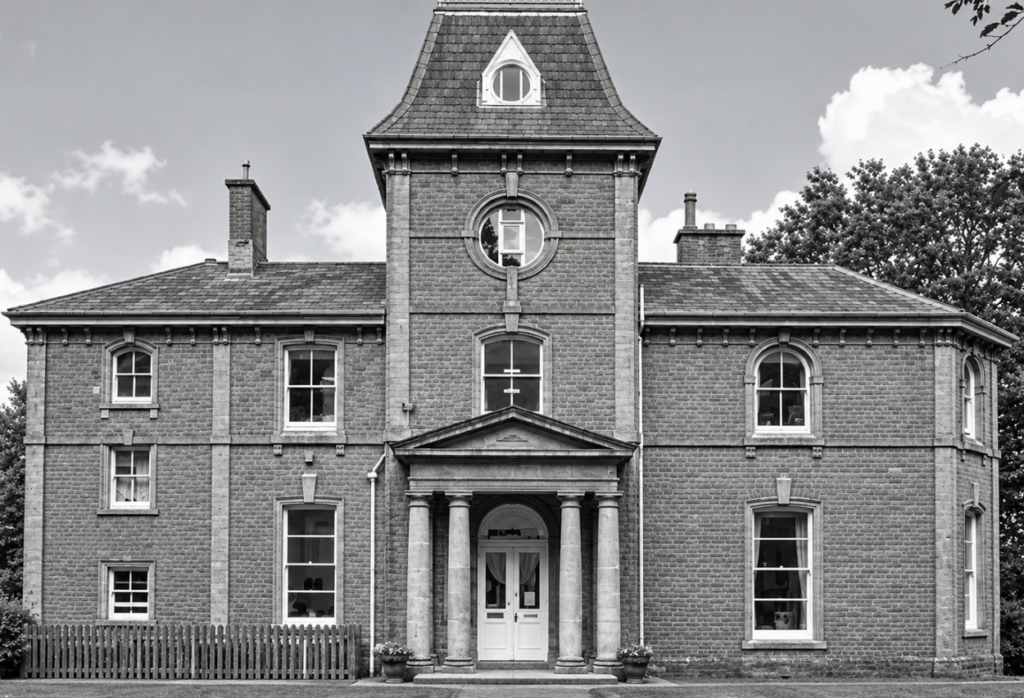
In January 1924, Taylor and a free miner, George Jones, bought the Oaken and Churchway Gale from a free miner, John Martin. Then, in a series of transactions, the gale was conveyed to Taylor and Gerald Thompson from Sloane Street in London, and then to the Oaken & Churchway Syndicate Ltd, whose members were Sydney and Tom Taylor. Taylor likely used the names and bank accounts of Jones, Thompson, and his brother in these transactions, acting as their nominees to avoid contravening the bankruptcy rules.[27]
Taylor’s next money-making venture was a plan to exploit the iron ore reserves in the Forest. Production had been significant in the past, but it had more or less ceased since World War One. Cyril Hart quotes a source from the time:
Negotiations are in progress which, if they can be brought to a successful issue, will result in the iron ore mines of the eastern side of Dean being reopened and developed. Should the proposed syndicate be formed, the mines will be worked on a very extensive scale. Sydney Taylor, of Coombs Park, Coleford, who for the past few years has been connected with various coal-mining enterprises in the Forest, is interested in these matters, and G. Brocklehurst Taylor, of Coleford, is the solicitor acting for the vendors.[28]
The iron industry had declined for several reasons:
- Competition from imported Spanish ore,
- The exhaustion of deposits above water level,
- the variable character of the ore and the small quantities won, which made it difficult to keep consignments satisfactorily uniform in quality.
Not surprisingly, the requisite finance was not forthcoming.
In 1925 the Whitecliff stone quarries were sold to a group of London financiers, the sale apparently being negotiated by Sydney Taylor of Coombs Park.[29] In 1927, the quarry and adjoining land were sold to the Portland Cement and Limestone Products Limited.
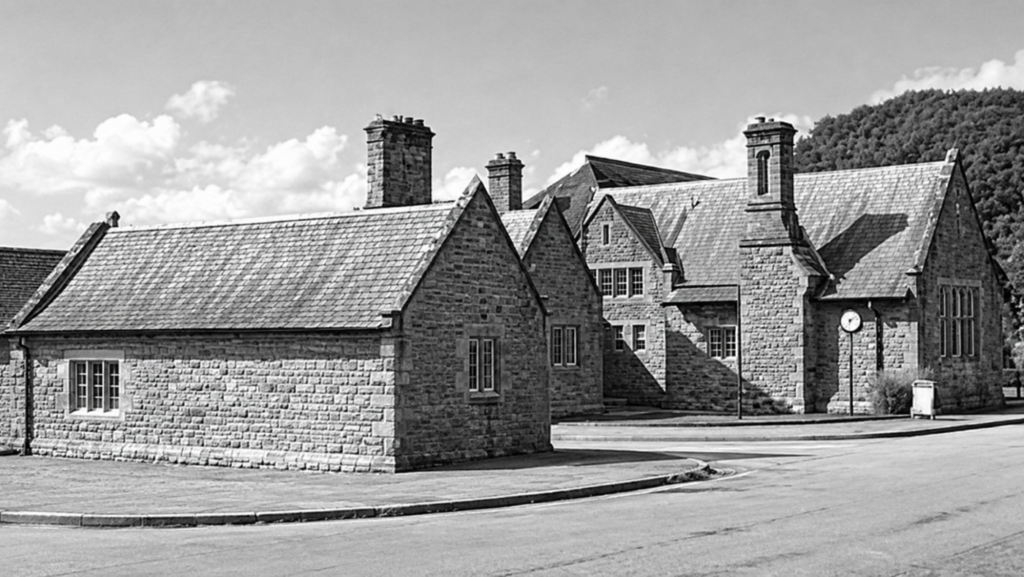
In November 1925, Taylor was elected President of the newly formed Town and District Club in Coleford. [30] He then moved into Old Deane Hall, near Speech House and furnished it lavishly. The Heart of the Forest Community School now uses Old Dean Hall to educate children with special needs.
Taylor’s Outcropping Operation
The 1926 lockout gave Taylor another opportunity to make money. In the summer of 1926, he entered into an arrangement with four Welshmen to work the outcrop on his Oaken & Churchway gale, in Wet Wood, which led to the death of Arthur Rivers. The inquest into Rivers’ death reported the events as follows:
At the end of July or beginning of August, men who were out on strike applied to Mr. D. W Young H.M. Deputy Surveyor of Dean Forest, for permission to cut the surface. This permission was given on condition that the men filled up the holes when done with, and that if they worked any coal it was to be for their own use and not for the purpose of sale.
For some time, no royalty was charged, but when the O. and C. Syndicate took the matter up and entered into an arrangement with the men to purchase all the coal from them at either 20s. 18s. per ton, then royalty was charged.
The O. and C. Syndicate rendered accounts of the coal thus got to the Gaveller’s Office. Eventually Mr. Forster Brown, H.M. Deputy Gaveller, wrote to the Syndicate pointing out that the gale was not being worked in accordance with Rule 9 of the Award of 1841, and he gave the Company notice to stop the working, fill up the holes, and put the roadways into proper state of repair.
The stipulation was made that the men working the outcrop of the Oaken and Churchway Gale should be the servants of the Syndicate and that they should be responsible for them under the Mines Act. A reply was sent by the Syndicate that they were doing everything that was possible to comply with the Deputy Gaveller’s requirements and those of the Mines Act. On October 15th permission was given for the surface working to continue until October 31st.
The Syndicate caused notices to be published calling upon the ” croppers” to come into Company’s service, but they refused to do so and continued working at the outcrop. They were then given notice to cease working, and this expired on the 30th October, the day after the deceased was killed.[31]
This was not a normal strike pit. The syndicate employed men to work their gale and was therefore responsible for how the coal was mined, the payment of the workers, and health and safety. They were also required to pay royalties to the Crown. Rule 9 of the 1841 Mines Act states:
All persons now or at any time hereafter holding any mine or mines of coal by virtue of a gale or gales, shall work and carry on the same in a fair, orderly, and workmanlike manner, and according to the best and most improved system for the time being of working coal mines, and shall not desist from working the same for a space exceeding 5 years at any one time after the vein of coal ore has been gained.[32]
The syndicate was not managing the day-to-day operation of the mine or ensuring the mine was worked “in a fair, orderly, and workmanlike manner, and according to the best and most improved system for the time being of working coal mines”. They not only failed to comply with the rules and regulations laid down by the Coal Mines Act, 1841, but also ignored letters sent to them by Mr Forster Brown, Deputy Gaveller, which drew their attention to these infringements.
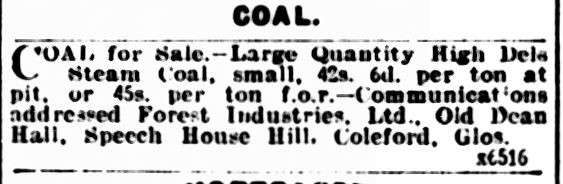
Just before the death of Rivers, Taylor was busy setting up a new company, Forest Industries Limited, with nominal capital of £100 in £1 shares, to buy the rights to mine coal at the Oaken and Churchway gale from the O&C Syndicate Limited, and “to carry on the business of mine owners, coal merchants and factors, makers and vendors of coal and other briquettes, timber and wood merchants, etc”. The new company’s directors were Sydney Taylor of Old Deane Hall and Tom Taylor of Weston-Super-Mare.[33] As an undischarged bankrupt, Taylor was not allowed to serve as a company director, but claimed he was acting as his brother’s nominee.
Taylor openly advertised his coal for sale at 45s a ton in the middle of one of the most significant industrial disputes of the twentieth century, in an environment where many families in nearby dwellings were struggling to get by with no income. He paid his men 20s a ton for mining the coal.
End of Outcropping
In August 1926, the Westbury Board of Guardians cut off all relief to destitute families of locked-out miners in East Dean, and in September 1926 the Monmouth Board of Guardians cut off all relief to destitute miners’ dependents. Consequently, some families were unable to buy food, and so some striking miners were forced to return to work. The large colliery companies began to raise coal and were keen to sell it at a high price and prevent outcrop coal from flooding the market. Consequently, they changed their policy and prohibited men from working their outcrops.[34]
Various public bodies had been buying outcrop coal for the past six months. Coal was now readily available from working pits, and public bodies could buy coal mined by the colliery companies. Now that coal was available from the main collieries, the authorities made it clear with public statements that it was an offence to acquire or deliver any coal, coke or patent fuels for industrial purposes without a permit. This applied to imported and English coals and included outcrop coal from any source whatsoever.
In a desperate attempt to prevent men from returning to work on 7 October, an MFGB delegate conference passed a resolution to end all types of outcropping by its members.[35] The Executive of the FDMA gave a commitment to the MFGB to attempt to implement its new policy.
It was clear that at least some of the above measures had an impact because by October 1926, the Gloucester newspapers reported that the working of the outcrops in the Forest of Dean had practically ceased.[36]
Meanwhile, in November, Taylor was busy persuading Joseph Ward and C. E. Parker from Sheffield to invest in a company to acquire the Hawthorn Limestone Quarries, at Drvbrook, and “to carry on the business of quarry masters, stone merchants, manufacturers of and dealers in tarred limestone, stone, granite, slag and macadam, and any other stone materials for the making of roads and pavements”. The company was formed with a capital of £25,000 (in shares of £1 each). Taylor negotiated the acquisition, served as a director, and held 2,500 shares in his brother’s name as his nominee.[37]
At the beginning of November, the number of miners working in the Forest, excluding safetymen, was 3,833, compared with 6,520 miners employed on 1 May at the beginning of the lockout. By the end of December, the remaining miners in the Forest and the rest of the country returned to work, defeated and forced to accept longer hours and reduced pay.
Howbeach Colliery
In February 1927, Taylor contacted William Morris, later Lord Nuffield, who by the early 1920s was Britain’s most successful motor manufacturer. He wrote a letter to Morris’s solicitor in which he stated that:
ever since he was 21 he had made £10,000 a year, and spoke of his connection with several big companies, and that he was a man of vast and valuable and highly successful experience in the colliery business; that he had dealt with millions of pounds, and had been associated with the richest and the best brains in the land.[38]
Taylor persuaded Morris to buy Howbeach Colliery and invest in a scheme to unify all the collieries in the Forest of Dean coalfield.[39] Howbeach Colliery, situated near Moseley Green, had a long but largely unsuccessful history. It was worked intermittently during the nineteenth century. After producing around 40,000 tons in 1893, it closed in 1895 because of water problems and poor coal prices.
In December 1919, a conglomerate of local colliery owners acquired Howbeach colliery. These included Lord Bledisloe of Norchard colliery, Arthur Morgan of Henry Crawshay & Co. Ltd., Percy Moore of Princess Royal colliery and Richard Thomas, owner of Lydney and Lydbrook tin works. Their first task was to lay off most of the men, amounting to 200 miners, with a view to developing the colliery and re-employment at a later date.[40] However, after the depression in the coal trade led to the 1921 lockout and the increasing cost of pumping water, they decided to close the colliery.
Morris followed Taylor’s advice that it was a good investment and formed a company called Morris Collieries Ltd, buying the colliery on 26 April 1927, for £20,000 with the view of mining 1000 tons a day and employing 1000 men. Taylor persuaded Morris to make him the managing director of the new company and to operate the sales agency. He also suggested that Morris should buy all the large collieries in the Forest of Dean, arguing that:
All the collieries would be electrified on the most up-to-date modern principles. A centralised sales agency would be set up for the whole output. Further, a central pumping house would be constructed to deal with water under one heading (this will be a great saving, as up till recently this has been one of the most difficult and costly problems of the coalfields). A great saving will also be effected in the purchase of stores, general equipment, and the pooling of railway wagons, while under the scheme of amalgamation it will be possible to utilise the valuable barriers of coal now existing between the various companies’ property which otherwise would be lost for all time.[41]
There was little chance that the existing colliery owners would sell up to Morris. When Morris found out that Taylor was an undischarged bankrupt, he cut off all contact with him. The acquisition of Howbeach was a disaster; no coal was raised, and Morris lost nearly all his money. In June 1928, Morris Collieries Ltd applied for voluntary liquidation.[42] Some of Taylor’s ideas were implemented when the mines were nationalised in 1947, but only after the colliery owners were forced to hand over their mines to the government and pay a fortune in compensation.
On 23 June 1927, Taylor applied for discharge from bankruptcy. The judge dismissed his application, saying that out of the original £50,000 owing to creditors in 1911, not a penny had been paid back and that:
the applicant’s transactions before the bankruptcy were of a somewhat lively nature, but these paled into insignificance beside the debtor’s own commercial adventures since the bankruptcy. The most curious feature of him was that the debtor had never acted on his own behalf or in his own name. But always on behalf of his brother or brothers. They found him acting as director of several companies but always on behalf of his brother. Did he own a motor car? No, it belonged to someone else. He had been living in a degree of comfort in the country and a large flat in Town, and one wonders how he had been keeping these places up and we find he is there as the guest of his brother. He had given no explanation of certain passages in letters he had written, but having heard them and his explanation in court, he had come to the conclusion that the applicant was a person who was not possessed of such a degree of integrity and righteousness as should be allowed to continue his career on his own account. He believed that he would be able to live in the future in comfort and even luxury as a guest of his brother. and therefore, he flatly refused to grant an order for his discharge.[43]
It appears that Taylor left the Forest of Dean in September 1927 and sold all his furniture and belongings. Meanwhile, Taylor’s brother Tom went on to have a very lucrative career as a merchant banker.
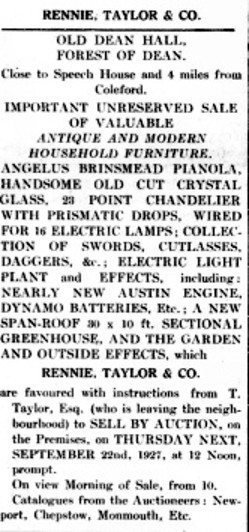
In May 1928, Taylor sold his Oaken and Churchway gale to a free miner, Amos Brown. It has been difficult to trace Taylor’s movements after he left the Forest. In 1939, he is listed as living in Magnolia Cottage on the banks of the Thames near Henley with his ex- servant, Ernest Edgar Poole, described as a retired General Commission agent. They now employed their own servant. Taylor used the alias John Gardner and was described as a retired business negotiator. Magnolia Cottage is a historic, Grade II-listed 17th-century timber-framed property.
Back in South Wales, at New Tredegar, after the 1926 Lockout, most of the men returned to work defeated, while others were laid off or blacklisted. In 1929, a massive mountain slip sent tons of earth crashing into the Tredegar colliery complex, crushing two of the primary shafts and rendering them completely unusable. The structural damage to the shafts was severe, and the surrounding mountain remained unstable, so the pit had to close permanently. This dealt a massive economic blow to the local mining community. The Rivers family and Gibbs family faced long-term unemployment and poverty.
Taylor was not the first person to come to the Forest of Dean seeking to make money out of its rich natural resources and its people and he was not the last. Some have tried in the past, and some have tried in recent years. Some have succeeded, some have failed and some have been driven out.
Sydney Taylor died while living in Worthing in October 1956, aged 79.
[1] Gloucester Citizen 9 November 1926.
[2] Western Daily Press 24 June 1927.
[2a] See Appendix Three and The Mines Department, List of Mines in Great Britain and the Isle of Man, 1925.
[3] Hansard, Volume 200, 25 November 1926.
[4] Gloucestershire Echo 21 August 1926.
[5] Andy Croll, Strikers and the Right to Poor Relief in Late Victorian Britain: The Making of the Merthyr Tydfil Judgment of 1900, The North American Conference on British Studies, 2013.
[6] Interview with Graham Morgan with Ian Wright at his house in November 2017.
[7] Harry Barton interviewed by Elsie Olivey on 7 June 1984, Gage Library.
[8] Humphrey Phelps, Forest Voices (Chalford: Amberley, 2008) 67.
[9] Anstis, Blood on the Coal, 113-115.
[10] Cheltenham Chronicle 6 November
[11] Anstis, Blood on the Coal, 113.
[12] Gloucestershire Chronicle 22 October 1926.
[13] Gloucester Citizen 26 August 1926.
[14] Cheltenham Chronicle 27 January 1900
[15] Hereford Times 15 July 1899 and Cheltenham Chronicle 27 January 1900.
[16] Cheltenham Chronicle 16 September 1911.
[17] https://lightmoor.co.uk/forestcoal/CoalFindall.html
[18] Gloucestershire Echo 5 May 1904.
[19] Financial News 18 July 1904.
[20] Cheltenham Chronicle 16 September 1911.
[22] Cheltenham Chronicle 16 September 1911.
[23] Cheltenham Chronicle 16 September 1911.
[24] Gloucestershire Echo 24 June 1927.
[25] Gloucestershire Echo 24 June 1927.
[26] Ibid.
[27] https://lightmoor.co.uk/forestcoal/CoalOakenLevel.html
[28] Cyril Hart, The Industrial History of Dean (Newton Abbott: David and Charles, 1971), 235.
[29] Ibid., 308.
[30] Dean Forest Mercury 27 November 1925.
[31] Gloucester Citizen 9 November 1926.
[32] James Wood, The Laws of the Dean Forest and Hundred of St Briavels, in the County of Gloucestershire. (London: H Sweet, 1878) 265.
[33] Gloucester Journal 30 October 1926.
[34] Gloucester Citizen 18 September 1926.
[35] Gloucester Citizen 8 October 1926.
[36] Gloucestershire Chronicle 22 October 1926.
[37] Gloucester Journal 13 November 1926 and Western Mail 30 November 1926 and
[38] Gloucestershire Echo 24 June 1927.
[39] Gloucester Journal 21 May 1927
[40] Gloucester Journal 20 December 1919.
[41] Western Mail
[42] Gloucester Journal 2 June 1928.
[43] Gloucestershire Echo 24 June 1927.